Head-to-Head Records: When Past Matchups Matter More Than Current Form
Head-to-head records provide crucial context in esports betting, especially when historical style clashes and psychological edges persist across frequent matchups. However, evaluating factors like sample size, game patches, and recent roster changes is essential to determine when to trust head-to-head history over recent player form.


Published October 21, 2026
AI Summary


Some players just have someone's number. You see it across every esport: a competitor who beats almost everyone keeps coming up short against one particular opponent. In this guide, we break down how to read head-to-head records in esports betting, when they deserve more weight than current form, and when they're just noise.
What a Head-to-Head Record Tells You
A head-to-head record is the history between two specific players or teams. If Player A and Player B have met ten times and Player B has taken seven, the record reads 7-3 in Player B's favor.
Current form measures something different. It looks at a player's recent results against everyone, usually over their last five to ten matches. Form tells you how well someone is playing right now. Head-to-head tells you how they tend to do against one opponent in particular.
Most of the time, the two point the same way. The interesting bets come when they don't: a player in strong form facing an opponent they've struggled against for months.
Why Head-to-Head Matters in Esports
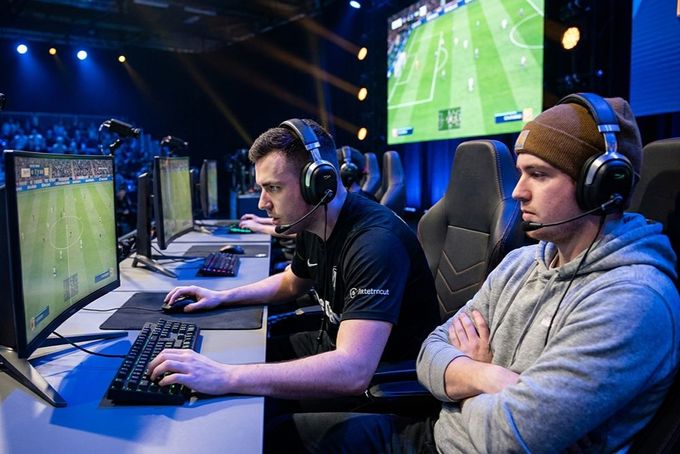
Esports produces head-to-head data quickly. In e-soccer, e-basketball, e-tennis, and e-hockey, the same players can meet several times in a single session. In fighting games, top players face each other repeatedly across tournaments. That volume gives you records with real depth.
Matchups also tend to be sticky in esports, for three reasons.
Style clashes. Some approaches simply work against others. A patient, counter-attacking e-soccer player can frustrate an aggressive one again and again. In fighting games, a player whose habits an opponent has figured out can struggle until they change their approach.
Familiarity. Players who meet often learn each other's patterns. The one who adjusts better tends to keep the edge until the other changes something.
The mental side. A long losing run against one opponent can weigh on a player. Pressure shows up in close moments, and close moments decide a lot of esports matches.
When Head-to-Head Should Outweigh Form
Head-to-head earns more weight when the conditions behind the record still hold. Look for these signs:
- A meaningful sample. Ten or more meetings tell you far more than two or three.
- Recent meetings. A record built over the last few weeks reflects how these players compete now.
- The same game and version. Results from the current game edition, and after the latest balance update, are the ones that count.
- The same format. Short e-soccer matches, a best-of-three in e-tennis, and a best-of-five fighting game set can produce different patterns.
- A clear style explanation. If you can say why one player troubles the other, the record is more likely to repeat.
When most of those boxes are ticked, a strong head-to-head pattern can outweigh a short run of good or bad form.
When Form Should Take Over
Head-to-head records go stale. Lean on current form instead when:
- The game has changed. A new edition or a big balance patch can reset matchups overnight.
- The meetings are old. Results from months ago may say little about two players who have since improved, changed style, or switched characters or teams.
- The sample is tiny. A 3-0 record looks convincing, but it often isn't.
- Form has shifted sharply. A player on a long, consistent run against strong opposition may simply have moved past an old problem.
Sample Size: The Number That Matters Most
Here's why small records mislead. Imagine two perfectly even players, each with a 50% chance in any match. The chance that one of them takes three straight meetings is 25%. In other words, one in four evenly matched pairs will produce a 3-0 record purely by chance.
Now take a 15-5 record. Between two even players, a gap that wide or wider happens only about 4% of the time. That record is much more likely to reflect something real.
A simple way to stay grounded is to shrink small records toward even. Add five imaginary results to each side before you work out the percentage. Player B's 7-3 record becomes 12-8, or 60%, rather than the raw 70%. The bigger the real sample, the less those imaginary results matter.
A Worked Example
Player A is in strong form and faces Player B, who leads their head-to-head record 7-3. The board reads:
- Player A: 1.65
- Player B: 2.25
Convert each price to implied probability by dividing 1 by the decimal odds. Player A sits at 60.6% and Player B at 44.4%. Together they add up to 105.1%, and the extra 5.1% is the book's margin.
The market is pricing Player A's form. Now weigh the history. If all ten meetings came on the current game version over recent weeks, and you can see a style reason behind Player B's edge, you might rate Player B closer to 48% or 50%. That's above the 44.4% implied by the price, which makes Player B worth a closer look.
If half those meetings came before a major patch, though, the case weakens. Strip them out, and you're left with a small sample that tells you much less. In that case, the price may be right.
Strategy and Tips
No approach guarantees a return, but these habits sharpen your reads.
- Filter before you count. Keep only meetings on the same game version and format, then look at the record.
- Look for the reason. A record with a clear style explanation is more reliable than one without.
- Check the trend. A 7-3 record, with the last four meetings going the other way, tells a different story from one with a steady pattern.
- Use it live. In live betting, an early lead for the player with the better head-to-head record can be more durable than the price suggests, and an early lead against them can be more fragile.
- Keep stakes steady. Esports schedules are busy, and it's easy to bet too often on patterns. Set a session bankroll and use our responsible gaming tools to set limits before you start.
Common Mistakes to Avoid
- Trusting tiny samples. Two or three meetings can easily be luck.
- Mixing game versions. Results from an older edition or before a big patch may not apply.
- Ignoring the format. A record from short matches doesn't automatically carry over to longer ones.
- Treating history as destiny. Head-to-head adjusts your read. It doesn't replace current form.
- Skipping the rules. Disconnects, abandoned matches, and walkovers can all affect settlement. Read our betting rules before you bet.
How to Bet Esports at Voltage Bet
Getting on takes less than a minute.
- Sign up or log in to your Voltage Bet account.
- Head to the esports section of our sportsbook and pick your game.
- Check the players, the format, and the markets on offer.
- Set your stake and confirm.
History doesn't decide the next match, but it can tell you where the market might be wrong. Do the homework and charge up your next esports session with us. Join now.
Frequently Asked Questions
What is a head-to-head record in esports betting?
It's the history of results between two specific players or teams. It shows how they've done against each other rather than against the field.
Is head-to-head more important than form?
Sometimes. Head-to-head carries more weight when the sample is large, the meetings are recent, and the game version and format haven't changed. Otherwise, current form usually tells you more.
How many meetings are needed for a head-to-head record to be reliable?
There's no fixed number, but ten or more recent meetings on the same game version is a reasonable starting point. Three or four meetings can easily be chance.
Do balance patches affect head-to-head records?
Yes. A patch can change how characters, teams, or tactics perform, so older meetings may no longer reflect the current matchup.
Can I use head-to-head records in live betting?
Yes. If a player with a strong head-to-head edge falls behind early, the live price may undervalue their chance of a comeback.