NBA Injury Report Betting Guide: How Star Absences Move the Line
In the NBA, a single star player's absence can swing spreads by several points. Because injury news updates continuously throughout the day, successful handicapping relies on understanding status designations, tracking usage redistribution to player props, and strategically timing your entry before or after line movement.


Updated September 22, 2026
AI Summary


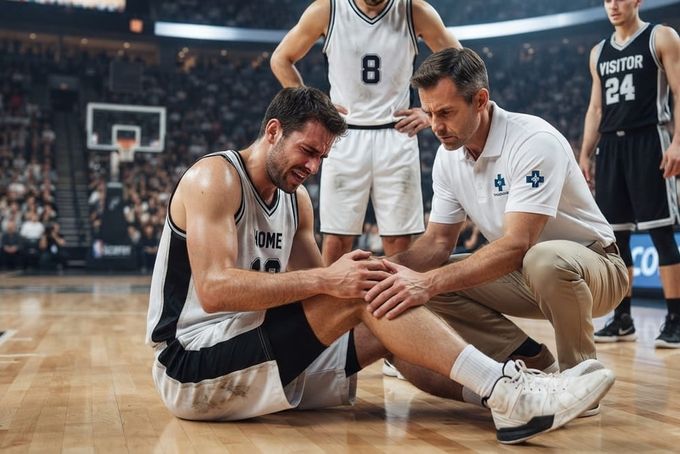
No major sport is as sensitive to a single absence as the NBA. Five players are on the floor, the best of them handle a huge share of possessions, and one name moving from questionable to out can shift a spread by several points in minutes. That makes the injury report less of a footnote and more of a core input. This guide covers how the report works, what each designation actually means, and how to bet around it without getting caught on the wrong side of the news.
How the NBA injury report works
Teams are required to publish player status ahead of every game, with an initial report the day before and updates as the situation develops. Statuses change throughout the morning, and final confirmations often arrive shortly before tip-off.
That timeline is the whole problem. The market reacts continuously as information trickles out, so a number you see in the morning may bear little resemblance to the one available at tip-off. Bettors who check the report once and treat it as settled are working from stale information.
The league also limits how freely teams can rest healthy stars, particularly in nationally televised games and when multiple stars would sit together. The practical effect is that outright rest is less common than it once was, but managed absences still happen, especially around back-to-backs and long road trips.
Why star absences move NBA lines so much
Basketball concentrates value in very few players. A team's best player might be involved in a third or more of its offensive possessions, and his replacement is usually a substantial downgrade rather than a marginal one.
There is also a chain reaction. When a star sits, his minutes go somewhere, his shot attempts go somewhere, and the rotation stretches deeper than the coaching staff would like. The drop-off is not just the difference between two players; it is the difference between a team's intended rotation and an improvised one.
That is why a single name can move a spread by several points, and why the very best players move it further than anyone else in American sport. It also explains why the market sometimes overshoots. A well-known absence is public information, heavily bet, and occasionally priced past what the on-court impact justifies.
Check Live NBA Odds
Track early market moves and capture line value across tonight’s NBA matchups.
View Game LinesReading the designations
Out. The player will not play. This is priced in quickly once confirmed.
Doubtful. Unlikely to play. Treat this as close to out for handicapping purposes, but note the number has usually not fully adjusted yet.
Questionable. The genuinely difficult one. The market prices uncertainty rather than an outcome, so the line sits between the two scenarios and moves sharply when the status resolves.
Probable. Expected to play. Small effect on the number, though it can hint at reduced minutes.
Available. Cleared to play with no restriction.
Questionable is where most of the value and risk live. If you have a strong read on how a specific team handles that designation, you are working with something the number has not yet settled on.
What happens to totals and player props
Spreads get the attention, but the knock-on effects run further.
Totals do not always drop when a star sits. A high-usage scorer leaving the floor lowers a team's efficiency, but it can also change pace, and a slower, less efficient team does not automatically produce fewer points than a faster one. Check how the absence affects tempo, not just talent.
Player props are where the redistribution shows up most clearly. When a primary option is out, the usage has to go somewhere, and the teammates who absorb it often have lines that have not fully caught up. Those markets carry their own conditions, though, so check the betting rules on how a prop is handled if the player does not appear.
Timing your bet around injury news
You are choosing between two positions, and you should choose deliberately.
Betting early means taking a number before the market has processed the news. If you are confident that a questionable player sits and the line has not moved for it, that is the position with the most value. It is also the position that loses if he plays.
Waiting means betting a number that already reflects confirmed information. Less upside, far less variance. For most bettors, this is the sounder default, particularly on spreads where a star's status is the single biggest factor.
What you should not do is bet without checking at all. Placing an NBA bet in the afternoon without opening the report is the most avoidable mistake in the sport.
NBA injury report betting strategy and tips
Check the report immediately before betting, not hours earlier. Statuses move all day.
Know which absences the market overreacts to. Household names get bet heavily on reputation. Quieter absences, like a starting center on a team with no backup, often move the number less than they should.
Look at who absorbs the usage. The replacement matters as much as the absence. Some teams have a capable option ready. Others have a hole.
Watch back-to-backs and travel. Managed absences cluster around compressed schedules and long trips.
Use live markets when the picture changes. Live betting is useful when a player is active but visibly limited, since the number may still be treating him as a full participant.
Common mistakes to avoid
- Assuming a star out always means fade that team. The adjustment is often already in the number, and sometimes past it.
- Assuming totals drop when a scorer sits. Pace and efficiency pull in different directions.
- Betting props without checking the report. A late scratch changes the whole market you just bet into.
- Ignoring the backup. Rotation depth determines how much the absence actually costs.
- Treating a morning line as current. In the NBA, that number is frequently obsolete by evening.
How to bet on NBA injury news at Voltage Bet
Open the NBA board with the injury report alongside it and work in that order: status first, number second. Decide whether you are betting ahead of a confirmation or after it, and be honest with yourself about which one you are doing.
For player markets, wait for confirmed status whenever possible. Once the game tips, keep the live board open because minute restrictions and early substitutions reveal things the pre-game number never accounted for.
The injury report is not background reading in the NBA; it is the first thing to check and the last thing to confirm. Know the designations, watch who absorbs the minutes, and decide deliberately whether you are betting ahead of the news or behind it. Get your NBA bets in at Voltage Bet.
FAQs
How much does a star being out move an NBA spread?
It varies by player and by roster depth, but several points are common for a team's best player, and the very top players move it further.
What does questionable actually mean for betting?
It means the outcome is unresolved and the number reflects uncertainty rather than a decision. Lines on questionable players often move sharply once the status is confirmed.
Should I bet before or after the injury news is confirmed?
Betting early offers more value if your read is right and more risk if it is not. Waiting for confirmation is the lower-variance choice and the better default for most bettors.
Do totals go down when a star player sits?
Not automatically. Losing a high-usage scorer lowers efficiency, but it can also change pace, so the two effects can offset each other.
What happens to my player prop if the player is ruled out?
That depends on the rules for the specific market, so check the betting rules before placing props on players whose status is uncertain.
When is the injury report most reliable?
Closest to tip-off. Earlier reports are genuine but provisional, and statuses commonly change on game day.